

Write the Next Chapter of the
CATHEDRAL'S STORY
Since 1909, as the spectacular mother church of the Diocese of Salt Lake City, the Cathedral of the Madeleine's mission has been to bring all of Utah the world's greatest treasure: the Body and Blood of Jesus Christ and the Faith, Hope, and Love that flow from Him.
Now, today, that mission is more important than ever. Thank you for being a part of it!
Since 1909 . . .
History
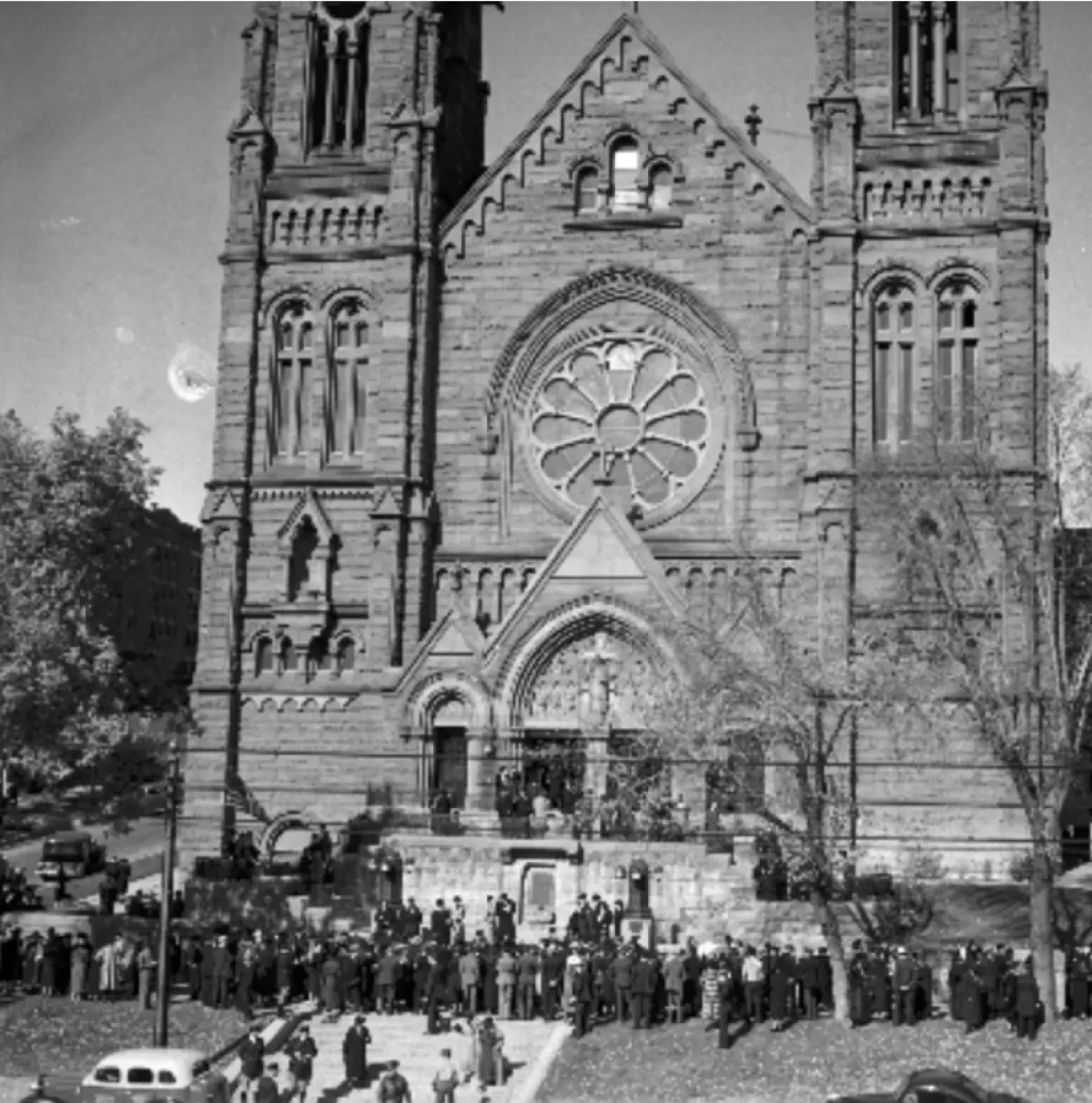
The Cathedral of the Madeleine is the only cathedral in the United States dedicated to Saint Mary Magdalene. Initial construction began in 1899 on property purchased by Lawrence J. Scanlan, the first Bishop of Salt Lake City. Saint Mary’s Cathedral, the original name, was dedicated on August 15, 1909.
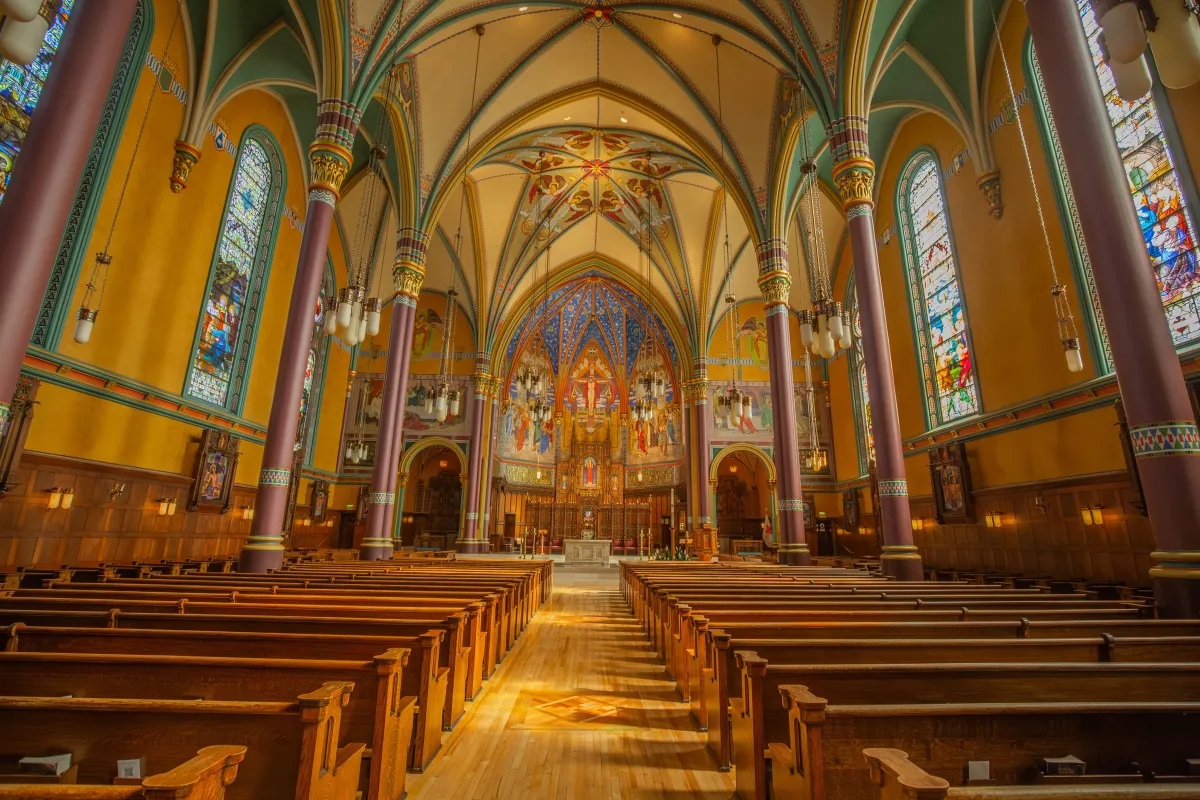
In the original construction, the stained glass windows were the dominant visual element of the Cathedral. Bishop Scanlan designed the windows to tell the story of Christ’s life through the Mysteries of the Rosary. After his death, the second Bishop of Salt Lake City, Joseph Glass, inspired by the Gothic art of the Middle Ages, reconstructed the art and furnishings of the interior, replacing the stained glass windows in the sanctuary with colorful murals and adding dramatic coloration and ornate wood carvings throughout the building.
Exterior changes included reconstruction of the tympanum, repositioning the front steps and adding decorative gargoyles. Bishop Glass also renamed the Cathedral: The Cathedral of the Madeleine. Between 1991 – 1993, the Cathedral was completely restored under the leadership of William K. Weigand, seventh Bishop of Salt Lake City. In addition, the altar and baptismal font were re-positioned to conform to the norms of the Second Vatican Council. The original Stations of the Cross and organ were replaced.
OUTSIDE ARCHITECTURE
The Exterior
The exterior of the Cathedral, originally constructed of Kyune sandstone, is primarily Romanesque in style. The sandstone blocks were replaced with blocks made of precast stone during an exterior renovation between 1975 – 1980. At the same time, the slate roof was replaced with a copper one.
The eight original sandstone gargoyles that were placed on the Cathedral in 1917 deteriorated due to weather and were removed in the 1930’s. In the 1975 exterior restoration, new, steel-reinforced gargoyles, weighing 1,200 pounds each, were placed on the towers. Each represents a petrified combination of a bird, a cat and a dog.
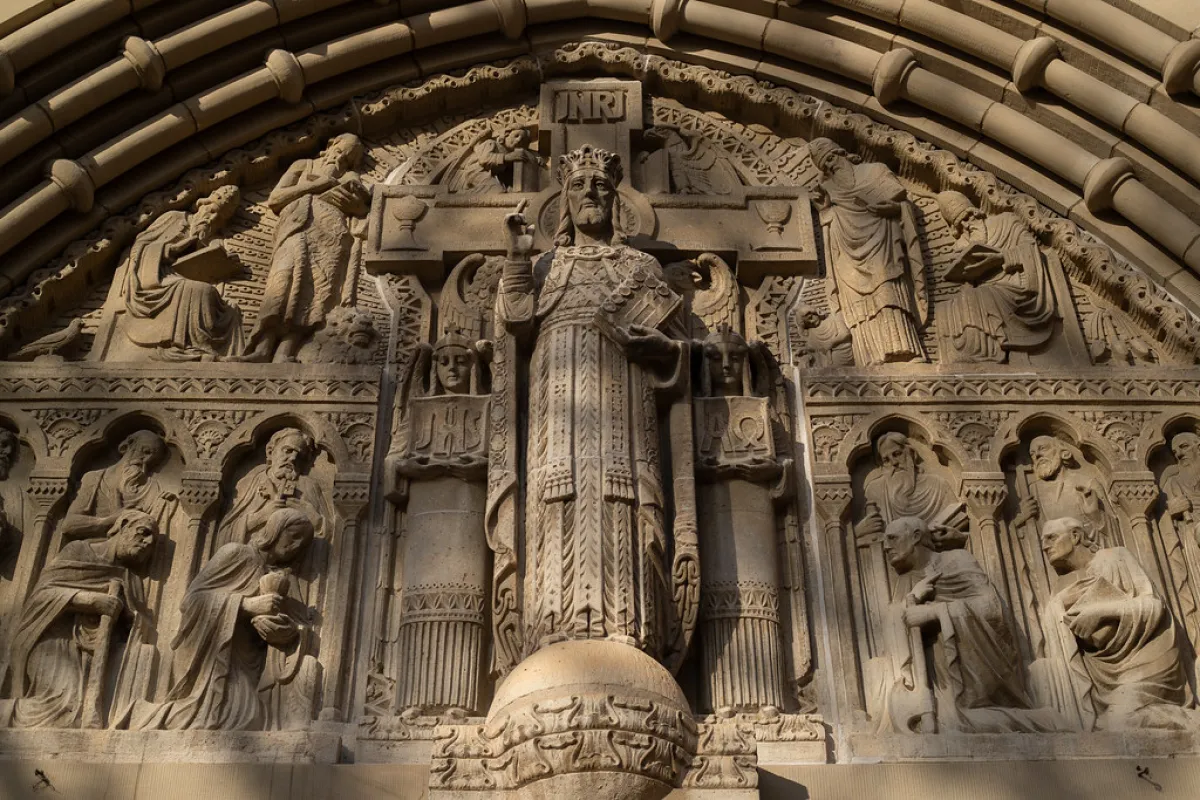
The tympanum above the main doors were designed and constructed by Francis Aretz of Pittsburgh, Pennsylvania, and features the figure of Christ the Great High Priest, flanked by an angel and the twelve apostles on each side. In addition, it displays the symbols of the four evangelists, Matthew (winged man), Mark (lion), Luke (ox), and John (eagle).
INSIDE ARCHITECTURE
The Interior
Inside the church, one can find colorful murals, ornate wood carvings, and more. The murals were designed and painted by Felix Lieftuchter in 1918. They represent a combination of Byzantine, Spanish Gothic, and modern styles.
In 1992, a new mechanical action English-style organ built by Kenneth Jones & Associates of Bray, Ireland was installed. A notable element of the organ is the Fanfare Trumpet that extends from the front of the choir gallery. The organ serves both liturgical and concert purposes.